
.identity
.history
A textile mill with two hundred years of history
Now in its tenth generation, Lanificio Paoletti promotes a culture of wool rooted in the territory of its origin, a place where creative energy has always abounded and where people treasure their textile traditions. The story of our family’s company began over two centuries ago, marked by revolutions and stories from a rural experience of “La Dolce Vita”.
From the Middle Ages to the 1600s
The origins of the Follina wool district
Textile production in Follina began in the mid-12th century along the river of the same name that runs through its old city center, when Cistercian monks introduced wool production to the area. Follatura, the process of washing and felting wool cloth, flourished in this rainy valley thanks to an abundance of water resources that powered mills and preindustrial machinery used to beat raw cloth.
The 1700s
The first glimmers of the industrial revolution in the Veneto
An ambassador of the Republic of Venice brought mechanization of the textile sector to area mills during the first industrial revolution. After a sojourn in England, this envoy set up shop in Follina as a wool manufacturer. He obtained a license to produce premium cloth inspired by English and Dutch drapery that was then sold on the French market.
1795
The founding of the company
The Paolettis were weavers of premium cloths from Miane who settled in Follina at the end of the 18th century. They set up their wool mill along the river, which powered the spinning and fulling machines, while the weavers worked on looms in their homes.
The 1800s

Manufacturing and modernization
The Follina wool district experienced considerable economic difficulties during the Italian wars of independence. Area companies gradually consolidated into the one firm still in business today: Lanificio Paoletti. In the 19th century, the company mechanized its entire production of yarn, developed steam finishing techniques, and set up in-house workshops to construct and maintain the mill machinery. This enabled the company to expand its production significantly. In 1865, Antonio Paoletti helped found the Worker’s Mutual Aid Society in Follina, and in 1877, he was one of the signors of the Articles of Incorporation of the Italian Wool Industrial Association.
World War I

Occupation and a move to Biella
In the fall of 1917, business halted due to the Austro-Hungarian invasion following the Italians’ defeat at Caporetto. Along with its workers, the Paoletti family fled to Biella, where it bought an abandoned spinning mill and began to produce yarn. In 1919, it returned to Follina and began the laborious process of rebuilding its mill.
The 1920s

Return and reconstruction
Giovanni Paoletti earned a degree in textile engineering in Biella in 1926. He experimented extensively with dying wool flock and developing new color blends that still today distinguish the creativity that Lanificio Paoletti brings to its work.
The 1930s
Innovation and new trends
A textile designer born and educated in the Spanish wool district of Terrassa was hired to work in-house. He introduced the experimental use of twisted yarns, combining wool with other natural fibers. The weaves yielded irregular and complex cloth surfaces, which had become very fashionable in France.
World War II

Military provisions
Specialized in the production of felt-cloth and blankets, the mill spent a lot of WWII producing military provisions. This exonerated its workers from the draft, sparing them the dangers of combat.
The 1950s

Cultural initiatives
A recipient of the Order of Merit from the Republic of Italy, Gaspare Paoletti founded the mill’s very own company orchestra and organized summer camps for children of the firm’s employees.
The 1960s
The growth of the brand
The wool mill begins to patent its certified, high-quality textiles made of pure wool and premium fibers such as mohair, alpaca, cashmere, and camelhair, which are sold throughout Europe.
The 1970s
Textiles for prêt-à-porter
The Italian Fashion Board asks Lanificio Paoletti to participate in a series of conferences with the country’s main fashion designers and to collaborate in predicting trends for textiles, lines, and colors. Magazines devoted to menswear such as Arbiter in Italy and Sir abroad begin to publicize the high quality of Lanificio Paoletti’s textiles.
The 1980s and 90s
Textiles for luxury sportswear
Due to their robust, rough quality, Paoletti wools begin to be used extensively in urban outerwear. The mill creates synergies for research and innovation with various brands in developing classic, contemporary textiles. The mill hires its first in-house designer trained on a manual loom. Designs and color patterns directed at women’s fashion become even more complex and expressive.
From 2000 onwards
The value of storytelling
The many architectural layers of this storied industrial complex bear witness to a constant evolution that has involved and preserved all phases of the manufacturing process, prizing the know how transmitted from one generation to the next since 1795. The rediscovery of the company’s historic archive is today an immense source of creativity, development, and innovation.
2009
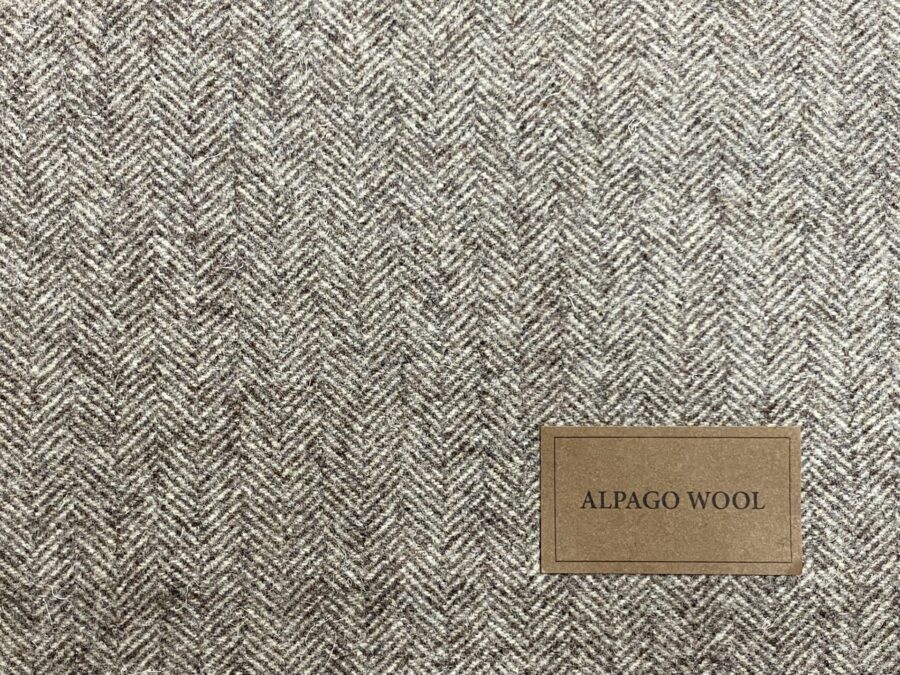
Alpago Wool: modern sustainability and wool tradition
The “Alpago Wool” project, in collaboration with the Fardjma cooperative, was born from the deep awareness that wool tells the story of a place, a community, and the bond between humans and nature. The true essence of this project lies in transforming a raw material destined for disposal into a virtuous model of circular economy and local promotion. The secret of the project is the artisanal processing that enhances the fiber in its purest form. The resulting yarns do not undergo chemical dyeing processes but preserve the natural colors of the sheep’s fleeces.
2023
Carbon Footprint: measuring to reduce environmental impact
We have strengthened our commitment to sustainability by calculating our Carbon Footprint, which has highlighted a total of 1,191 tons of CO₂e emissions. We aim to reduce our emissions in the coming years by continuously monitoring our action plan, evaluating the purchase of green energy, and continuing to measure our carbon footprint annually to verify its effectiveness.